
Akusoli Foot Insoles

Akusoli Insoles Review: Ever thought a simple insole could end your heel pain after a long day? Or is magnetic acupressure insole tech just a clever trick?
This section dives into what you care about: do Akusoli magnetic insoles really help with plantar fasciitis, arch pain, and foot tiredness? You’ll see how users feel, the science behind magnetic acupressure, and if these insoles are a good choice over Dr. Scholl’s, Superfeet, or custom orthotics.
If you’re on your feet all day, play sports, or just want to walk more comfortably, you need solid answers. This review examines the main claim: does it offer targeted pressure, better blood flow, and extra support? We’ll look at what buyers say it does in real life.
Key Takeaways
- Akusoli Insoles Reviews focus on relief for heel and arch pain and daily foot fatigue.
- Magnetic acupressure insole design combines reflexology-style nodules with magnets and cushioning.
- Many users report immediate comfort boosts; some note an adjustment period.
- Do Akusoli insoles work depends on your condition, shoe fit, and consistency of use.
- This review will compare Akusoli to common alternatives and highlight real user feedback.
What Is Akusoli and How Do Akusoli Insoles Work?

Akusoli offers a non-invasive way to ease foot strain. Their insoles mix traditional reflexology with modern materials. They are designed to stimulate pressure points and support your feet.
Product overview and origins
Akusoli aims to add reflexology insoles to your daily shoes. Their design is based on reflexology charts and Japanese foot massage. They promise comfort for those who stand or walk a lot.
Magnetic acupressure technique and reflexology basis
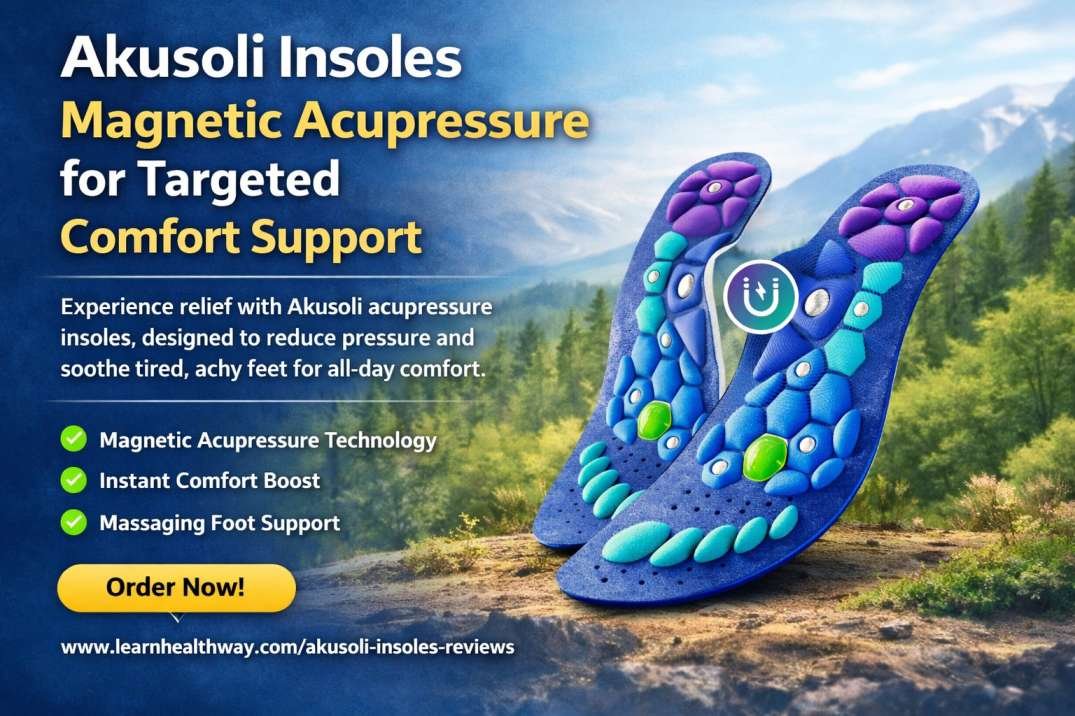
The idea is simple. Raised nodules on the insoles match reflex points on the sole. These nodules give a gentle massage as you move.
Embedded magnets help with microcirculation and reduce inflammation. This is how Akusoli insoles work: they stimulate, compress, and use magnetic fields while you walk.
Materials, antimicrobial silver coating, and breathable design
The insoles are made of EVA foam and soft silicone. They balance shock absorption and feedback. A top layer has an antimicrobial silver coating to fight bacteria and odor.
They also have perforations and breathable channels. These help keep the insoles dry and cool. The design also supports your arches and absorbs shock.
| Feature | What it does | Benefit for you |
|---|---|---|
| Acupressure nodules | Targets reflexology points on the sole | Continuous massage sensation while you stand or walk |
| Embedded magnetic array | Placed under key nodules to interact with tissue | Designed to support circulation during activity |
| EVA foam + silicone layers | Combines cushioning with tactile feedback | Reduces shock, improves comfort, supports arches |
| Antimicrobial silver top layer | Inhibits bacterial growth and odor | Keeps insoles more hygienic over time |
| Perforated, breathable design | Allows airflow and moisture control | Helps keep feet cooler and reduces sweat buildup |
Akusoli Insoles Reviews

Before you decide, read a clear summary of real-world experiences with Akusoli. Many verified users report reduced foot fatigue and noticeable relief in heel and arch pain after a short adjustment period. Workers in retail, nursing, and construction often say they end shifts with less soreness and more energy.
Summary of verified user experiences
Review threads and purchase-verified feedback show a common pattern. Users typically feel an instant comfort boost from cushioning and the acupressure nodules. After consistent wear for one to three weeks, many describe steady improvements in walking comfort and reduced plantar pain.
Some users with plantar fasciitis report a 40–60% improvement in daily pain levels. Others note better circulation, less numbness or tingling, and modest posture gains that ease lower back discomfort.
Common positive themes from buyers
Buyers praise the combination of massage-like stimulation and cushioning. Many Akusoli customer reviews highlight immediate comfort in sneakers and work boots. The antimicrobial silver coating gets frequent mentions for cutting down odor and keeping feet fresher on long shifts.
Users also credit the insoles with improved standing endurance. For many, the perceptible reduction in end-of-day soreness makes Akusoli worth trying alongside supportive shoes.
Common complaints and durability concerns
Not every report is positive. Some people stop early because the nodules feel intense during the first three to seven days. That break-in sensation is the most cited reason for returns or mixed Akusoli customer reviews.
Fit issues arise with narrow or dress shoes because the insoles add thickness. A portion of users notice foam compression after heavy daily use for two to three months. That flattening can reduce effectiveness and prompt buyers to replace the pair sooner than expected.
Overall, Akusoli insoles before and after images and comments tend to show real, but varied, benefits. Results depend on your shoe fit, activity level, and severity of foot issues. You should expect an adjustment phase and plan correspondingly if you want to maximize your chances of success.
Explain the Foot Pain Problem You May Be Facing
If your feet hurt after a long day, you’re not alone. Many people find it hard to figure out why their feet ache. Small changes in shoes, work, or body weight can cause big problems.
Typical causes: standing, poor footwear, flat feet, high arches
Standing for long hours on hard floors can hurt your plantar fascia and heel. Shoes that don’t fit right or lack support make it worse. Flat feet and high arches also cause problems.
Being overweight and doing the same thing over and over can wear down your feet. Spotting these issues early and making changes can help prevent future pain.
Common diagnoses: plantar fasciitis, heel spurs, neuropathy
Plantar fasciitis causes sharp pain in the heel when you first get up. Knowing what causes it helps you get treatment faster. Heel spurs are calcium deposits that cause pain when the fascia pulls on the bone.
Neuropathy makes your feet tingle, feel numb, or burn, often from diabetes or nerve pressure. Overusing your feet can also lead to pain and stiffness after activity.
How poor foot support affects knees, hips, and lower back
Poor foot support changes how you walk. This can lead to knee and hip pain. Your body has to work harder to compensate, which can hurt your lower back too.
Many physical therapists and podiatrists start by treating foot mechanics when dealing with knee or back pain. Foot problems can make distant joints hurt, reduce endurance, and change your posture over time.
| Problem | Common Symptom | Typical Cause |
|---|---|---|
| Plantar fasciitis | Sharp heel pain on first steps | Inflamed plantar fascia from overuse or poor shoes |
| Heel spurs | Localized point pain at heel | Calcium deposits from chronic strain |
| Peripheral neuropathy | Tingling, numbness, burning | Diabetes, nerve compression, or vascular issues |
| Flat feet / high arches | Generalized foot fatigue, instability | Altered arch mechanics and uneven load |
| Joint compensation | Knee, hip, or lower back pain | Poor foot support effects leading to gait change |
How Magnetic Acupressure Insoles Aim to Reduce Foot Pain
You want relief that works while you move. Magnetic acupressure insoles reduce foot pain. They use raised nodules, magnets, and support for continuous stimulation and better pressure.
Acupressure nodules and continuous massage effect
Raised nodules act like small, built-in acupressure cushions. They are under your heel, arch, and forefoot. Each step gives a brief massage to reflexology points.
This massage can calm tight muscles and stimulate nerve endings. It may help block pain signals. Users often feel less soreness after daily wear.
Strategic magnet placement for circulation and inflammation control
Manufacturers place magnets around heel and arch zones. These areas are mapped to common reflex points. The magnets aim to improve blood flow and reduce swelling.
While proof is mixed, many notice warmer, less stiff feet. Magnets are part of a broader approach that includes support and stimulation.
Arch support and better pressure distribution while walking
Contoured arch support shifts load away from the plantar fascia. It spreads pressure evenly across the sole. This reduces stress on heel and forefoot points that often cause pain.
With shock-absorbing EVA layers, these insoles cushion impact. This lowers strain on knees and hips. Over time, walking becomes more comfortable.
| Feature | What it does | How it helps you |
|---|---|---|
| Acupressure nodules | Targeted raised points under heel, arch, forefoot | Provides continuous massage, eases local tension, may gate pain |
| Strategic magnets | Embedded arrays near reflex zones | May improve circulation, reduce swelling, support soft-tissue recovery |
| Contoured arch support | Molded arch profile with EVA cushioning | Redistributes pressure, reduces plantar fascia overload, improves alignment |
| Shock absorption | Multi-layer foam and gel combinations | Less impact per step, reduced joint stress, more walking comfort |
| Hygiene features | Antimicrobial top layer and breathable design | Limits odor and keeps insoles fresh during regular use |
Benefits of Akusoli Insoles: Instant Comfort Boost and Long-Term Effects
You’ll feel the difference right away. Akusoli insoles have soft EVA cushioning and raised acupressure nodules. They offer instant comfort and better shock absorption than basic foam pads.
Immediate benefits
The padding absorbs impact as you walk. This reduces jarring on your heels and forefeet. The nodules also give a gentle massage, providing an instant comfort boost.
Short-term improvements
In one to two weeks, you might feel less tired feet during long shifts. You’ll also notice less numbness and tingling due to better blood flow. Tenderness will decrease as your feet get used to the stimulation.
Long-term benefits
After a month or more, using them can reduce heel and arch pain. This is true for those with plantar fasciitis or heel spurs. Better arch support and alignment also improve your posture.
This can ease strain on your knees and lower back. You’ll find it easier to stay active longer without needing as many breaks. Many users report walking more without feeling sore at the end of the day.
Wear these insoles in work shoes, walking sneakers, or casual footwear to keep the benefits. For ongoing discomfort, use them consistently for weeks. Watch how your posture and gait change.
Who Should Try Akusoli Insoles: Use Cases and Target Groups
If you’re always dealing with foot soreness, Akusoli insoles might help. They focus on pressure points and add extra cushioning. They’re a good option for those looking for a simple way to ease foot pain.
People with plantar fasciitis might find relief with Akusoli. The insoles have nodules and arch support to ease heel and arch strain. Start with a small amount to see how your feet adjust.
These insoles are great for jobs that keep you on your feet all day. Nurses, retail workers, and teachers often use them to reduce foot fatigue. They help absorb shock and make long hours easier on your feet.
Older adults might also benefit from these insoles. They offer gentle cushioning and have an antimicrobial coating. This makes them a good choice for comfort and hygiene without the need for complicated devices.
Athletes looking for daily comfort might find Akusoli useful. They can help with soreness after workouts. They might also offer some benefits for those with knee, hip, or lower-back pain related to foot support.
Not everyone should rely on these insoles as a solution. If you have serious foot issues or complex gait problems, custom orthotics are safer. Also, check if your shoes can fit the insoles before buying.
| Candidate | Primary Benefit | When to Choose Custom Care Instead |
|---|---|---|
| People suffering from foot pain | Immediate cushioning, reduced pressure | Persistent severe pain unresponsive to conservative care |
| Individuals with plantar fasciitis | Arch support, heel relief during daily activities | Chronic plantar tears or advanced degeneration |
| Stand all day insoles users (nurses, retail) | Lower fatigue, better shock absorption on long shifts | Occupations needing specialized safety footwear or custom specs |
| Insoles for older adults | Extra cushioning, antimicrobial hygiene layer | Severe balance disorders or advanced neuropathy |
| Recreational athletes | Everyday comfort, reduced post-activity soreness | Competitive athletes requiring performance orthotics |
Akusoli Insoles Features and Technical Specs
Discover what makes these insoles special. They focus on fit, materials, and tips to improve your daily foot comfort.
Size guidance and trim-to-fit
Akusoli is available in two sizes, S-M and L-XL. These sizes fit most shoes. You can trim the toe edge to match your insole.
The S-M size fits EU 36–42 / USA 5–10 / UK 3–8 / AU 3–8. The L-XL size fits EU 42–47 / USA 10–14 / UK 8–12 / AU 8–12.
When trimming, use your current insole as a guide. Make sure the heel aligns with the shoe’s heel counter. This ensures the nodes are under your arch and heel for proper acupressure.
Layered materials and construction
The insoles have a shock-absorbing EVA foam base. A silicone layer on top creates nodules for targeted stimulation. Small magnetic arrays are placed under the heel and arch for focused contact.
The top fabric has an antimicrobial silver coating to prevent odors and bacteria. This keeps your shoes fresh, paired with the foam base.
Breathability, shock absorption, and fit tips
The top layer has perforations and breathable EVA to reduce heat and moisture. The EVA foam absorbs impact on hard floors, making standing more comfortable.
For the best results, remove the factory insole before using Akusoli. Align the heel and trim only at the toe. Make sure the silicone nodules are under your arch and heel. These steps ensure the acupressure and shock absorption work as intended.
| Feature | What it does | How to optimize |
|---|---|---|
| Size options S-M L-XL | Covers common shoe ranges with trimmable fit | Use your current insole as a cutting guide; keep heel aligned |
| EVA foam insoles | Primary shock absorption and cushioning | Place in shoes used for long standing or walking |
| Silicone nodules | Provides acupressure stimulation under arch and heel | Ensure nodes sit under the arch when fitted |
| Magnetic arrays | Concentrated contact points at heel and arch | Align carefully during fitting for intended effect |
| Antimicrobial silver coating | Limits odor and bacterial growth | Allow insoles to air dry between uses for longevity |
| Perforated top layer | Improves breathability and reduces moisture | Use in breathable shoes and replace if wear reduces perforation |
Real-World Trial: Adjustment Period and Break-in Tips
When you first try Akusoli insoles, you’ll feel the acupressure nodules. This might feel odd or tender for a few days as your nerves adjust. Many people feel mild tingling or pressure at first. But, they soon find more comfort as they get used to it.
What to expect in the first 3–7 days.
- Day 1–2: wear for 1–2 hours. Focus on low-activity periods to test fit and sensation.
- Day 3–5: increase to 3–4 hours. You should notice reduced sensitivity and better circulation.
- Day 6–7: extend wear toward a normal shift if comfort allows. Stop if severe pain appears.
Recommended break-in schedule and shoe compatibility advice.
- Follow break-in tips Akusoli that ramp wear time slowly. Avoid using them for a full 8–12 hour shift on day one.
- Sneakers, work boots, and roomier shoes work best. Narrow dress shoes may feel crowded.
- Remove the factory insole when needed to prevent crowding and to keep the heel anchor snug against the heel counter.
How to trim and position insoles for optimal arch support.
- Use your original insole as a template. Trace and cut carefully with sharp scissors or a utility knife.
- Test placement by pressing your heel firmly into the heel cup and standing. Adjust until the arch support lines up under your natural arch.
- Refer to a trim insoles guide when in doubt. Small cuts at a time keep the fit safe and precise.
Stick with the adjustment period acupressure insoles routine and adjust fit gradually. If mild discomfort persists beyond two weeks, check shoe compatibility or consult a podiatrist for personalized advice.
Akusoli vs Alternatives: Drugstore Inserts, Superfeet, and Custom Orthotics
When looking for relief, you have many options. These range from cheap drugstore foam to custom orthotics. It’s important to consider cushion, support, and how they stimulate your feet. Akusoli offers shock absorption, acupressure nodules, and a hygiene layer, setting it apart from other options.
How Akusoli compares to generic foam and gel insoles
Generic foam and gel inserts provide quick cushioning. But they often compress and lose shape over time. Akusoli, on the other hand, maintains structural support and includes nodules that massage your feet as you walk. This combination offers better comfort and fatigue reduction than flat drugstore pads.
Comparison with popular brands like Dr. Scholl’s and Superfeet
Dr. Scholl’s offers a variety of reliable orthotic insoles. They focus on biomechanical support and fit technology. If you need arch correction and a trusted brand, Dr. Scholl’s is a good choice. But if you prefer acupressure stimulation with cushioning, Akusoli might be better.
Superfeet is designed for athletes and heavy use, providing firm arch support. Akusoli and Superfeet differ in feel. Superfeet is firmer and better for runners needing rigid support. Akusoli is softer and offers massage-like relief for those on their feet all day.
When custom medical orthotics are still the better choice
Custom orthotics are best for those with significant structural issues or a medical diagnosis. They are made from molds and gait analysis, offering precise correction. While they are more expensive, they can address complex problems that off-the-shelf options can’t.
Use this comparison to find the right orthotics for you. If you have mild to moderate pain and want daily comfort with stimulation, Akusoli is a good choice. For rigid arch control, consider Superfeet or Dr. Scholl’s based on your activity level. If your symptoms are severe, see a podiatrist for a custom solution.
Claims, Evidence, and The Truth Behind Magnetic Therapy
You’ve probably seen ads about magnetic insoles helping with pain and circulation. It’s important to separate fact from fiction when choosing products like Akusoli.
What the research says about touch and pressure
Studies on acupressure and reflexology show mixed results. Some small studies found less pain and better relaxation with specific touch. Experts from places like the Cleveland Clinic and Baylor University say pressure on certain foot points can change pain signals and improve body awareness.
This effect often comes from regular touch and better body awareness, not a single fix. You might feel less pain when certain points are pressed because your nervous system changes how it handles pain.
The mixed record on magnets and blood flow
When you ask if magnetic insoles work, the answer is not clear. Some small studies suggest magnets might affect blood flow or inflammation. But other trials found no real benefit, just a placebo effect.
Real people often report feeling warmer and having less swelling. These feelings might be due to slight changes in some users. Or they could be from better support, less friction, and the hope of feeling better.
How engineering and anecdote create combined effects
Design matters most. Good arch support, shock absorption, and pressure distribution help with foot pain. Adding acupressure nodules means constant stimulation that can change how you feel pain.
Magnets might help a bit for some. But the real benefit usually comes from support, stimulation, and hygiene features like antimicrobial coatings. This mix explains why many people feel better, even if there’s no solid proof of magnetic therapy’s benefits.
Practical points to consider
- Check if the comfort and support fit your shoes and activities before looking at magnetic benefits.
- Keep track of symptoms for a few weeks to see if swelling or circulation improves.
- See a podiatrist for serious heel pain, neuropathy, or vascular disease. They can give you the right care.
Size Options and Price Packages
The magnetic acupressure insoles are available in two different size options to fit a wide range of shoe sizes and provide comfortable support for everyday use.
Available Size Options
S–M Size
-
EU: 36–42
-
USA: 5–10
-
UK: 3–8
-
AU: 3–8
L–XL Size
-
EU: 42–47
-
USA: 10–14
-
UK: 8–12
-
AU: 8–12
These sizes are designed to fit most standard shoes and can be trimmed slightly if needed to achieve the perfect fit.
Price Packages
Customers can choose from several bundle offers depending on how many pairs they want to order.
4 Pairs – Most Popular
-
Discount: 71% OFF
-
Original Price: €279.96
-
Discounted Price: €79.96
3 Pairs Bundle
-
Discount: 66% OFF
-
Original Price: €209.97
-
Discounted Price: €71.97
2 Pairs Bundle
-
Discount: 49% OFF
-
Original Price: €139.98
-
Discounted Price: €70.98
1 Pair
-
Price: €69.99
These bundle deals allow buyers to save significantly compared to purchasing a single pair.
Pricing, Bundles, and Where to Buy Akusoli Insoles
Before you buy, check the current offers to know the Akusoli insoles price. Sales often make the cost lower, making it worth trying. Buying more pairs can also save you money, covering more shoes.
There are many bundles to choose from. You can get one pair for €69.99 or more pairs for less. For example, the 4-Pair bundle is 71% off, originally €279.96 now €79.96. There are also 3-Pair and 2-Pair bundles with discounts.
Buying from the Akusoli official store is safest. It ensures you get genuine products and keeps your warranty valid. This way, you also get the best prices on materials like silver-coated fabric.
Check the return policy and guarantee terms on the Akusoli official store page. They offer refunds and support for eligible returns. This is good if the insoles don’t fit or don’t provide the expected comfort.
For any questions after buying, email support@akusoli.com. They also have phone support for different regions. Use these contacts for warranty questions, sizing help, or tracking issues.
When shopping, compare prices across bundles to find the best deal. Make sure to buy from the Akusoli official store for authenticity. And, look for promotions to save even more.
Pros and Cons: Honest Evaluation Based on Industry Experience
Before you invest in foot care, you need clear guidance. This review highlights the good and bad points. Think about your job, shoes, and pain level as you read.
Strengths
Akusoli is a non-invasive, drug-free solution. It combines arch support with acupressure nodules and magnets. This can help ease foot pain and fatigue for those who are on their feet a lot.
The insoles have an antimicrobial silver coating to fight odor and improve hygiene. They can be trimmed for a better fit, making them suitable for various shoes.
Limitations
There’s an adjustment period. The acupressure can be strong at first, which might not appeal to those who prefer soft cushioning. The insoles are thicker, so they might not fit in narrow shoes.
Some users experience compression and wear after daily use. The performance can decline after two to three months. These insoles are for managing symptoms, not curing structural issues.
Value assessment
Akusoli is cheaper than custom orthotics but offers similar benefits. During sales, the price drops even more, making it a good deal for those with standing jobs.
When evaluating insoles, consider comfort, cost, and durability. For many, Akusoli is a smart choice before spending on custom solutions.
Practical recommendation
Try Akusoli during sales to balance cost and effectiveness. This review suggests it’s a good option for mild-to-moderate foot pain and for those who stand a lot.
| Aspect | What to Expect | Who Benefits Most |
|---|---|---|
| Relief type | Arch support + acupressure + mild magnetic stimulation | Retail workers, nurses, hospitality staff |
| Hygiene | Antimicrobial silver coating reduces odor | Daily shoe users, athletes, commuters |
| Fit and comfort | Trimmable, but adds thickness; adjustment period needed | Casual and athletic shoe wearers |
| Durability | Good for moderate use; heavy daily use may show wear after 2–3 months | Light-to-moderate daily users |
| Cost vs alternatives | Much cheaper than custom orthotics; more features than basic gel inserts | Budget-conscious buyers seeking therapeutic features |
Customer Testimonials and Case Examples
Here are real stories from people who used Akusoli insoles at work. They talk about feeling more comfortable, having more energy, and feeling less pain. These stories show how Akusoli meets people’s needs and expectations.
Retail workers and nurses say they feel less pain at the end of their shifts. They also mention standing longer without getting tired and feeling more energetic. Many talk about their feet not getting cold and better blood flow.
Skilled workers and construction staff say they stand better and feel less pain in their knees and lower back. One craftsman no longer needs to sit down in the afternoon and feels less hip tightness. These stories suggest better foot alignment and less pressure.
People with plantar fasciitis say they feel a lot less pain every day. They report a 40–90% decrease in heel and arch pain over weeks. They credit the insoles for making their pain less and helping them recover faster.
Those with heel spurs and neuropathy have mixed but mostly positive experiences. Heel spur sufferers say they feel less pressure and pain when walking. Neuropathy patients mention fewer cramps and better feeling in their feet, which helps them balance and feel more confident.
Not everyone is happy, though. Some people find the insoles hard to get used to at first, have trouble fitting them in narrow shoes, and say they flatten out too quickly. These concerns help you think about the pros and cons of wearing them.
Experts and reviewers agree with many of the users. This shows that the design of Akusoli insoles really works for different jobs and health issues.
- Retail & Nursing: Reduced end-of-shift pain, more energy, better circulation.
- Trades & Construction: Less knee and lower-back soreness, longer standing tolerance.
- Plantar Fasciitis: Marked pain drop, faster recovery between activities.
- Heel Spurs & Neuropathy: Cushioning benefits and improved proprioception for some users.
These stories are a great guide if you’re thinking about trying Akusoli insoles. The mix of good and bad feedback helps you know what to expect before you buy.
Conclusion
The Akusoli insoles offer a unique mix of features. They have reflexology-style nodules, magnetic arrays, and arch support. They also have EVA shock absorption and a top layer that fights bacteria.
These insoles can give you instant comfort and may help your posture over time. They can also reduce pain in your heels and arches.
They are best for people who stand or walk a lot. If you have mild-to-moderate plantar fasciitis, flat feet, or heel spurs, you might see improvements. But, they’re not a cure for severe medical issues.
For the best results, trim the insoles to fit your feet. Start wearing them gradually, following a 3–14 day plan. Also, try them with different shoes to see what works best.
Buying from the official store can be a good idea. You can get bundle deals and have access to customer support if you need it.
In short, Akusoli insoles are a good, non-invasive option for foot pain. They might not solve every problem, but they can help a lot of people. They’re a great first step before looking into more medical solutions.