How to Reduce Inflammation in the Upper Back
Upper back pain can make even simple tasks feel difficult. Inflammation in this area often results from poor posture, muscle strain, or repetitive movements. Understanding how to reduce inflammation in the upper back helps you find relief and return to normal activities faster.
This guide covers practical methods that address upper back inflammation naturally. You will learn about simple techniques, lifestyle adjustments, and warning signs that require professional care.
What Causes Upper Back Inflammation?
Common Triggers of Upper Back Pain
Several factors contribute to upper back inflammation. Sitting for long periods puts stress on the muscles between your shoulder blades. This position creates tension that leads to swelling and discomfort.
Heavy lifting without proper form strains the upper back muscles. When you lift incorrectly, small tears develop in muscle fibers. Your body responds with inflammation as part of the healing process.
Stress causes muscle tension throughout the body. The upper back often holds this tension, creating tight knots that become inflamed over time.
How Inflammation Develops in Back Muscles
Inflammation is your body’s natural response to injury or strain. When upper back muscles experience damage, your immune system sends blood flow to the area. This increased blood flow brings healing cells but also causes swelling, warmth, and pain.
Repetitive strain from daily activities keeps inflammation active. Without proper rest and treatment, acute inflammation becomes chronic, making the condition harder to manage.
Signs You Have Upper Back Inflammation
Physical Symptoms to Watch For
Upper back inflammation creates several noticeable symptoms. You might feel a dull ache between your shoulder blades that worsens with movement. The area may feel tender when you touch it or apply pressure.
Stiffness often accompanies inflammation. You may find it hard to turn your head or reach overhead without discomfort. Some people experience a burning sensation across the upper back.
Muscle spasms can occur when inflammation becomes severe. These sudden contractions create sharp pain that limits your range of motion.
When to Seek Medical Attention
Most upper back inflammation improves with home care within a few days. However, certain symptoms require medical evaluation.
Seek help if pain spreads down your arms or causes numbness and tingling. These signs might indicate nerve involvement that needs professional treatment.
Fever combined with back pain could signal an infection. Severe pain that does not improve after a week of home treatment also warrants a doctor’s visit.
Effective Ways to Reduce Inflammation in the Upper Back
Apply Cold and Heat Therapy
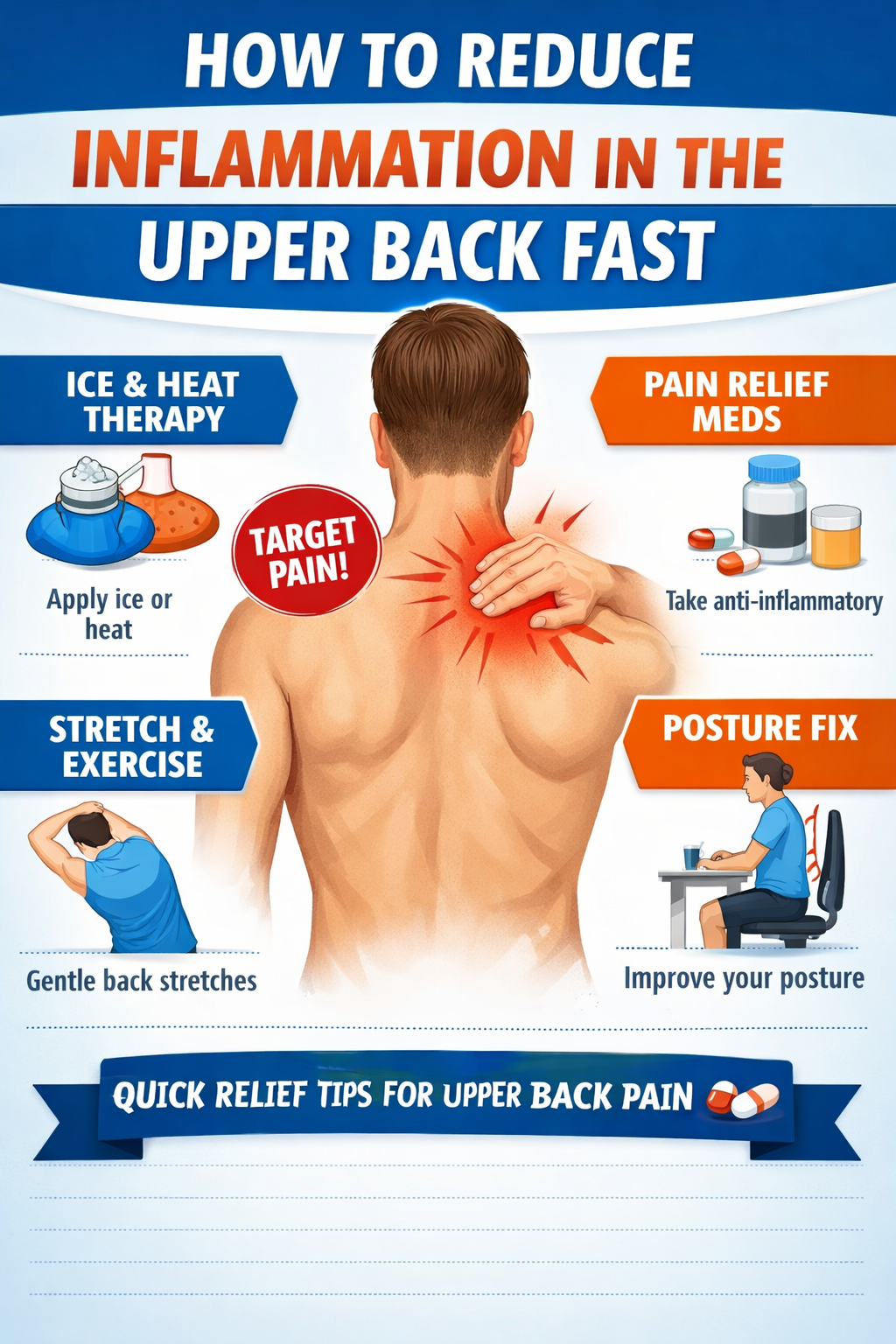
Temperature therapy offers quick relief for upper back inflammation. Ice reduces swelling during the first 48 hours after injury. Wrap ice packs in a thin towel and apply them to the painful area for 15 minutes at a time.
After the initial inflammation decreases, switch to heat therapy. Warm compresses increase blood flow and relax tight muscles. A heating pad or warm shower can provide significant relief. Alternate between cold and heat if your symptoms persist beyond two days.
Practice Gentle Stretching Exercises
Stretching keeps muscles flexible and reduces upper back stiffness. Start with shoulder rolls by moving your shoulders in slow circles. This simple movement loosens tension across the upper back.
Try the doorway stretch by placing your forearms on a door frame and gently leaning forward. Hold this position for 30 seconds to open up your chest and release upper back muscles.
The cat-cow stretch from yoga works well for upper back inflammation relief. Get on your hands and knees, then alternate between arching and rounding your back. Move slowly and breathe deeply during each stretch.
Perform these exercises twice daily but stop if you feel sharp pain. Gentle stretching should create mild tension without increasing inflammation.
Improve Your Posture Throughout the Day
Poor posture is a leading cause of upper back muscle inflammation. When you slouch, muscles work harder to support your spine. This extra effort creates strain that leads to swelling.
Sit with your back straight and shoulders relaxed. Keep your computer screen at eye level to avoid leaning forward. Your feet should rest flat on the floor with knees at a 90-degree angle.
Stand tall by imagining a string pulling the top of your head toward the ceiling. Pull your shoulder blades slightly together without forcing them. Good posture reduces stress on upper back muscles and helps decrease back inflammation naturally.
Use Anti-Inflammatory Foods in Your Diet
What you eat affects inflammation levels throughout your body. Include foods rich in omega-3 fatty acids like salmon, walnuts, and flaxseeds. These nutrients help reduce upper back pain by fighting inflammation from within.
Colorful fruits and vegetables contain antioxidants that support healing. Berries, leafy greens, and tomatoes are excellent choices. Turmeric and ginger have natural anti-inflammatory properties that complement other treatments.
Limit processed foods, excess sugar, and refined carbohydrates. These items can increase inflammation and slow your recovery. Staying consistent with healthy eating supports long-term upper back inflammation relief.
Stay Hydrated and Rest Properly
Water helps flush inflammatory compounds from your body. Drink at least eight glasses daily to support muscle recovery. Dehydration makes muscles more prone to cramping and inflammation.
Quality sleep gives your body time to repair damaged tissues. Sleep on your back or side with proper pillow support. Avoid stomach sleeping, which twists the neck and strains upper back muscles.
Take short breaks throughout the day if your work involves repetitive movements. Even five minutes of rest every hour helps prevent muscle fatigue and inflammation.
Try Massage and Self-Myofascial Release
Massage increases blood flow to inflamed muscles and promotes relaxation. Use a tennis ball or foam roller against a wall to target tight spots in your upper back. Apply gentle pressure and roll slowly over tender areas.
Self-massage techniques work well for upper back tension. Use your fingertips to apply circular pressure around your shoulder blades. Work gradually from the spine outward, spending extra time on knots.
Consider professional massage therapy for stubborn inflammation. Licensed therapists can access deep muscle layers that self-massage cannot reach effectively.
Lifestyle Changes That Help Prevent Upper Back Inflammation
Set Up an Ergonomic Workspace
An ergonomic setup prevents the repetitive strain that causes upper back inflammation. Adjust your chair height so your arms rest comfortably on your desk. Position your monitor directly in front of you to avoid twisting.
Use a chair with proper lumbar support to maintain natural spine alignment. Keep frequently used items within easy reach to minimize awkward reaching movements. These small adjustments significantly reduce upper back stiffness relief needs.
Maintain Regular Physical Activity
Regular exercise strengthens upper back muscles and improves flexibility. Activities like swimming, walking, and yoga promote overall back health. Strong muscles better resist the strain that leads to inflammation.
Include exercises that target your upper back specifically. Rows, reverse flys, and band pull-aparts build strength in this area. Start with light resistance and gradually increase as your muscles adapt.
Consistency matters more than intensity. Aim for at least 30 minutes of moderate activity most days of the week.
When Home Remedies Are Not Enough
Most cases of upper back inflammation respond well to self-care methods. However, persistent or worsening symptoms require professional evaluation.
Physical therapy provides targeted exercises and manual techniques for stubborn inflammation. A therapist can identify movement patterns that contribute to your pain and teach you corrective strategies.
Your doctor might recommend other treatments if inflammation does not improve. These could include specific medications or additional diagnostic tests to rule out underlying conditions.
Frequently Asked Questions
How long does upper back inflammation take to heal?
Mild upper back inflammation typically improves within 3 to 7 days with proper rest and home treatment. More severe cases may take 2 to 4 weeks to fully resolve.
Can stress cause upper back inflammation?
Yes, stress creates muscle tension that can lead to upper back inflammation. Managing stress through relaxation techniques helps reduce this type of pain.
Is it better to use ice or heat for upper back inflammation?
Use ice for the first 48 hours to reduce swelling. After that, heat therapy works better to relax muscles and improve blood flow.
What sleeping position is best for upper back inflammation?
Sleeping on your back with a pillow under your knees or on your side with a pillow between your legs helps maintain proper spine alignment and reduces strain.
Can dehydration make upper back inflammation worse?
Yes, dehydration reduces muscle flexibility and can worsen inflammation. Drinking enough water supports muscle recovery and overall back health.
Should I exercise when I have upper back inflammation?
Gentle stretching and light activity are beneficial, but avoid strenuous exercise that worsens pain. Listen to your body and rest when needed.
Conclusion
Learning how to reduce inflammation in the upper back empowers you to manage pain effectively. Simple strategies like proper posture, temperature therapy, and gentle stretching provide significant relief for most people. Combining these methods with healthy lifestyle choices helps prevent future inflammation.
Remember that recovery takes time. Be patient with your body as it heals. If symptoms persist beyond a week or worsen despite home treatment, consult a healthcare professional for personalized guidance.