
Power Grid Generator Review: Could a compact device you build in your garage help you slash your electricity bill and gain real energy independence?
You’ll learn about the Power Grid Generator, a diy electricity generator blueprint. It’s designed to help you reduce electricity bills with an affordable off grid home system. The guide shows you how to use common parts from local stores to build a portable unit. This unit supports everyday use and emergency backup power.
This no bill electricity system is a low-cost alternative to big solar installations and traditional generators. It’s easy for beginners, supports eco-friendly energy ideas, and can work with your solar panels. This helps make your home more self sufficient with power.
The Power Grid Generator is meant to supplement your household power—not replace it. This way, you can cut costs, reduce demand from the grid, and keep important loads running during outages.
Key Takeaways
- The Power Grid Generator is a diy electricity generator blueprint for homeowners.
- It targets lower upfront costs than large solar setups or commercial generators.
- Design focuses on portability, space efficiency, and beginner-friendly steps.
- Ideal as a supplemental off grid home system and emergency backup source.
- Can help reduce electricity bills and support a move toward a self sufficient power system.
What the Power Grid Generator Claims to Do and Who It’s For
The blueprint promises to teach you how to make an off-grid energy device. It can help lower your monthly bills and provide backup power. It claims to cut costs by a significant amount, depending on how much you use it.
It’s designed to power lights, chargers, and small appliances. The guide explains how to build it in simple steps. You’ll learn about wiring, assembly, and how to use it safely.
You get instant digital access to a detailed blueprint. It’s made to be easy for beginners to follow. The goal is to help you go from making a list to having a working unit fast.
The guide is for homeowners who want to try something new. Renters looking for a portable solution and DIY fans looking for a cheap alternative to solar will find it useful. It’s also for those preparing for power outages, campers, and anyone interested in energy independence.
The blueprint sees the system as a backup power source, not a full replacement for utility power. It supports small electronics, pumps, and a few household devices. This helps set clear expectations about what it can do.
You can find links to social pages and support channels on Instagram. These are for updates and to get help from others. They’re great for tips, troubleshooting, or to see how others have used the system.
| Claim | What You Can Expect | Best For |
|---|---|---|
| Reduce monthly bills | Partial bill reduction for small loads based on usage | Homeowners who want to experiment, DIYers |
| Emergency backup | Power for lights, phone chargers, and essential small appliances | People preparing for outages, renters with portable needs |
| Beginner-friendly blueprint | Step-by-step digital guide with parts lists and diagrams | Beginners and those new to how a generator works |
| Off-grid experiments | Scalable builds for testing and learning | DIY enthusiasts and anyone exploring energy device projects |
How the Power Grid Generator Works: Basic Principles and Generator Design
The blueprint shows how a power grid generator works. It starts with basic principles like magnetic flux and coil winding. These basics turn simple motion into usable current for small appliances.
The guide focuses on parts you can find at Home Depot or RadioShack. It covers coil construction, magnet placement, and rotor balance. This helps you build a unit that produces stable voltage under low-to-moderate loads.
Coils are key because their winding count and gauge affect output and heat. The manual explains how to match coil turns to magnet strength and rotor speed. This lets you predict power generation and avoid common wiring mistakes.
Practical sections cover rectification and voltage regulation. This makes the alternating output usable DC or clean AC for sensitive devices. You learn safe methods for tying the device into a household circuit as a supplemental source while preventing backfeed.
The guide walks through common control elements like diodes, capacitors, and simple regulators. It shows how to direct power through a charge controller and inverter. You see options for meters and fuses to monitor performance and limit faults.
Assembly tips emphasize mechanical longevity: proper shaft alignment, bearing choice, and securing magnets to avoid demagnetization. You get step-by-step coil templates and torque suggestions for consistent power output.
The blueprint is realistic about expected results. It outlines typical wattage ranges for compact builds and explains how build quality and user skill affect outcomes. You get tested scenarios for charging phones, running LED lights, and powering small pumps, with notes on when a larger generator is needed.
Lastly, safety notes explain how to prevent harmful energy feedback loops and protect the home electrical system. The guide advises isolating the DIY unit during grid outages and using clearly labeled disconnects when integrating with household circuits.
| Component | Purpose | Typical Spec |
|---|---|---|
| Rotor & Stator | Generate relative motion and magnetic flux | Balanced rotor, laminated stator core |
| Coils | Induce voltage from changing magnetic field | Copper wire AWG 18–24, 50–500 turns |
| Magnets | Create steady magnetic field | Neodymium N35–N52, secured to rotor |
| Rectifier & Regulator | Convert AC to usable DC and stabilize voltage | Bridge rectifier, 12–24V regulator |
| Inverter/Charge Controller | Manage battery charging and AC output | MPPT or PWM controller, pure sine inverter |
| Safety Devices | Prevent backfeed and protect circuits | Manual disconnect, fuses, surge protector |
Detailed Review: Performance, Results, and Realistic Expectations
This review gives you a clear idea of what to expect from a DIY power grid generator. Hobbyist labs and videos show small setups can produce modest power. You can expect outputs from a few hundred watts to 1,500 watts for well-made units.
Before you start, know what to expect. The power your DIY unit can make depends on how well you wire it, the quality of parts, and your skills. Even with the same plan, results can differ.
These units can power LED lights, phone chargers, laptops, and small appliances like mini-fridges or microwaves for a bit. But, they can’t handle big loads like HVAC systems, electric ovens, or clothes dryers.
Testing is key. Use a multimeter and an inverter load bank to check your work. Keep track of voltage, current, and how long it runs to see how it saves you money and works reliably.
Don’t believe claims of saving up to 80% on bills. Your savings will depend on how you use it and your home’s wiring. Start small and increase use only when you’re sure it works well.
Think about the cost and how long it lasts compared to what you save on bills. Look for real reviews and test results online. But, always check things out for yourself. This device is meant to help, not replace, your main power source.
Step-by-Step DIY Blueprint and Assembly Instructions
The blueprint has everything you need to build the generator from scratch. It includes a parts list, diagrams for the rotor and stator, and instructions for coil winding. You also get magnet placement charts and wiring schematics to make the process easy.
The guide is designed for beginners. It follows a step-by-step layout. Each step includes a tool list, safety tips, and instructions for assembling the device without needing to be an electrical expert.
Begin by organizing parts and checking the item count against the list. Then, wind coils as instructed and check the wire gauge. Follow the coil notes to avoid mistakes and ensure the rotor and stator are correctly assembled.
The wiring schematics show where to connect rectifiers, voltage regulators, and grounding. You’ll learn how to assemble the wiring harness, verify polarity, and install the rectification stage. This will help you produce stable DC output.
There are testing checkpoints throughout the plan. Measure open-circuit voltage, test current under a small load, and confirm polarity before final mounting. Secure mounting and gradual load testing reduce the risk of damage while you build a small generator for daily use.
The blueprint focuses on finding affordable parts. You can find them at Home Depot, RadioShack alternatives, and online electronics vendors. It suggests substitutions, cost-saving tips, and reliable sources for magnets, bearings, and copper wire.
Troubleshooting tips are included for common issues like noisy bearings, weak output, and wiring errors. Short diagnostic steps help you quickly find and fix problems, getting your generator working again without delays.
Follow the step-by-step testing flow: verify coil continuity, confirm magnet orientation, test regulator thresholds, and run staged loads up to the rated output. This approach helps you safely assemble the generator and build it with confidence.
The plan is designed to be space and budget-friendly. It offers compact layouts, part alternatives, and a concise parts kit. This makes it easy to complete the assembly in a small workshop or garage.
| Stage | What You Do | Key Checkpoints |
|---|---|---|
| Preparation | Organize parts, inspect magnets, cut wire, gather tools | Parts count match, wire gauge confirmed, safety gear ready |
| Coil Winding | Wind coils to spec, secure leads, apply insulation | Turn count verified, resistance within range, no shorts |
| Rotor & Stator Assembly | Mount magnets, align stator laminations, set air gap | Magnet polarity uniform, air gap within tolerance, smooth rotation |
| Wiring & Rectification | Connect coils to bridge rectifier and regulator, ground chassis | Polarity checked, voltage stable, regulator setpoint validated |
| Initial Testing | Spin by hand or low-speed motor, measure open-circuit voltage | Expected voltage reached, no excessive heat or noise |
| Load Ramp | Apply small resistive load, increase gradually to target | Current within rated limits, temperature stable, mounting secure |
| Final Checks | Fasten enclosures, label connections, document readings | All fasteners torqued, wiring neat, log of volt/current saved |
Build a Small Generator: Compact, Portable, and Space-Efficient Design
You can make a small generator for your apartment balcony or a small backyard. It should be light and easy to move. This design makes it simple to carry or store without straining yourself.
Look for parts that are easy to carry. Use small, strong magnets and a compact alternator. Tight coils and integrated power management also save space.
Make it easy to move around. Use foldable mounts and panels that can be removed. This makes it great for camping, workshops, or quick power needs.
Think about how you’ll use it. It can power LED lights, charge phones and laptops, and even small appliances. You can adjust the output based on your needs and space.
Keep it running smoothly with simple maintenance. Just oil the bearings, check the wires, and store it dry. This makes it easy to use in busy homes.
Choose trusted brands like Bosch, Delta, or Shimano for parts. This ensures it lasts longer and holds its value. It also keeps your setup efficient and reliable.
Want to upgrade later? Modular parts let you add bigger coils or a better alternator. This way, you can start small and grow without replacing everything.
Energy Independence and Reducing Reliance on the Traditional Power Grid
Using a DIY generator is a smart way to cut down on your reliance on the traditional power grid. Start by seeing the Power Grid Generator as a backup for important needs during power outages.
Pair the generator with simple energy-saving habits to make it last longer. Use LED lights, keep refrigerators at efficient temperatures, and charge devices wisely to save power.
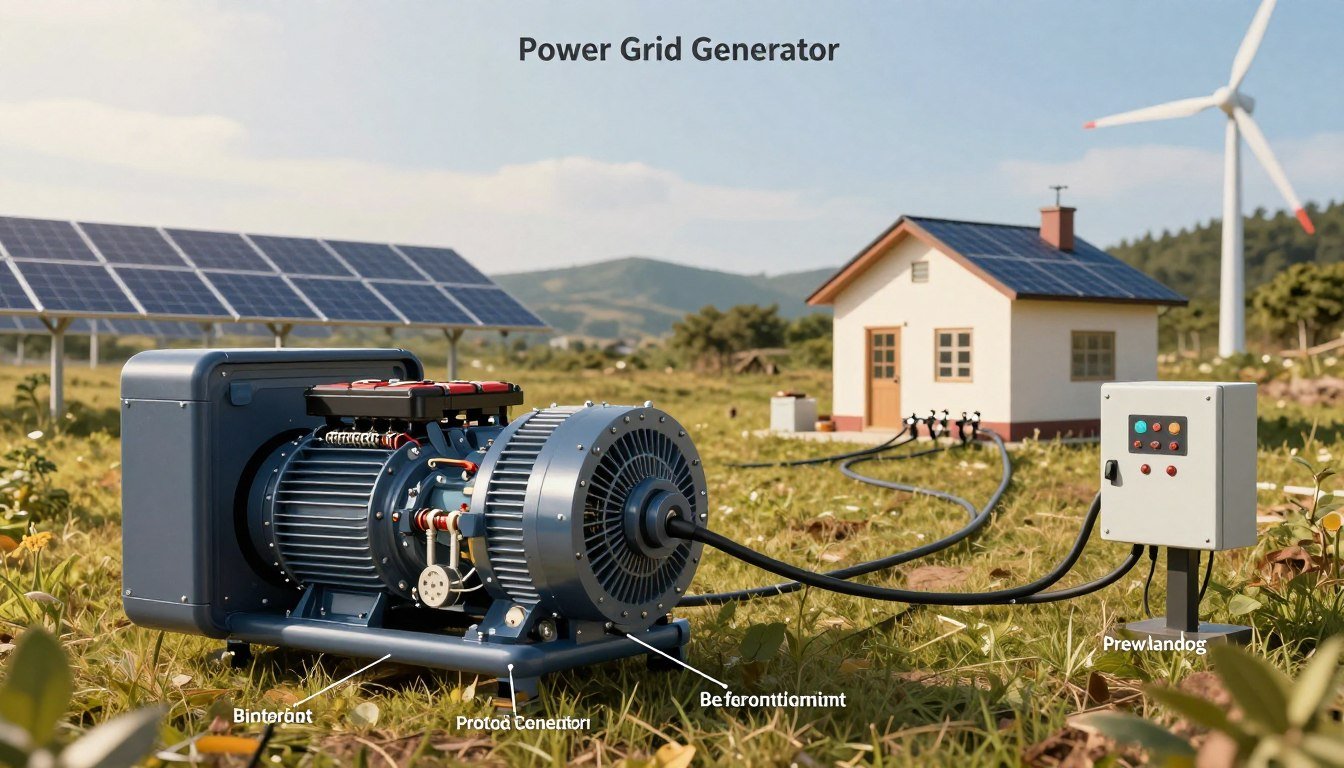
For true home energy independence, mix simple hardware with smart storage. Add a small battery bank, think about solar panels on your garage roof, and use the generator to charge batteries when needed.
Focus on the most important loads to get the most out of your setup. Keep lights, phones, and fridges on different circuits. This way, you can keep them running longer when the grid goes down.
Going fully off the grid might need bigger systems and expert help from licensed electricians or solar installers. See it as a hands-on way to learn and test your energy backup plan.
Keep track of your progress with simple numbers: how long the generator lasts, how much grid power you save, and which appliances use the most energy. These numbers will help you plan for bigger steps toward energy freedom.
Look at social media for stories of people reducing their grid dependence. These stories can inspire and help you refine your own plan. Always remember safety and legal rules as you grow your system.
Safety, Legal, and Practical Considerations for DIY Energy Systems
When building a DIY energy system, safety should be your top priority. Always follow the National Electrical Code and local rules. This includes using proper grounding, fuses, and circuit breakers to avoid fires and protect your equipment.
Never connect your system to the grid without a professional transfer switch. This action can harm utility workers and break the law. Before linking your system to household circuits, check with your local utility and building department.
Wear the right safety gear when working on your system. This includes safety glasses, insulated gloves, and insulated tools. If you’re unsure about wiring safety, consider hiring a licensed electrician for the main panel integration.
Make sure your backup system is isolated from the grid during outages. Use a transfer switch or an inverter with anti-islanding protection. Always follow the manufacturer’s guidelines for devices from Honda, Generac, or Outback Power.
Regular maintenance is key to keeping your system running smoothly and saving money in the long run. Check connections, bearings, and mounting hardware regularly. Replace worn parts on schedule and keep a log of maintenance activities.
Before starting your project, understand local permit rules. Some areas require inspections for permanent generators or wiring changes. Meeting these requirements avoids fines and ensures your system meets safety standards.
Consider the placement, ventilation, and fuel storage of your system. Keep generators and batteries in well-ventilated areas away from living spaces. Store fuel according to EPA and NFPA guidelines and secure battery banks to prevent tipping or short circuits.
Before your system’s first use, check a few things. Verify grounding, confirm breaker sizing, test the transfer switch, and use a multimeter for wiring safety. If your system is for emergencies, run drills to ensure it works as expected.
Below is a quick comparison to guide choices on safety and compliance for small DIY builds.
| Area | DIY Best Practice | Why It Matters |
|---|---|---|
| Grounding | Use copper grounding rods and bond to panel | Prevents shock and stabilizes voltage |
| Transfer Switch | Install a manual or automatic transfer switch | Prevents dangerous backfeed into the grid |
| Permits & Inspections | Obtain permits and schedule inspection | Ensures legal compliance and safety verification |
| PPE | Safety glasses, insulated gloves, insulated tools | Reduces risk of injury during assembly and testing |
| Maintenance | Quarterly checks, replace worn bearings and seals | Maintains reliable operation of your backup electricity system |
| Isolation | Anti-islanding inverter or locked transfer switch | Protects utility crews and meets electrical code |
Costs, ROI, and Comparisons to Solar or Traditional Generators
Building a DIY generator is affordable. You can use a used engine, alternator, and basic wiring. This keeps costs low. The $49 blueprint helps you build it easily, saving on trial and error.
Compared to solar, DIY generators offer quick benefits. Solar systems need a big upfront cost for panels and batteries. They provide steady power and long-term savings. DIY generators are cheaper upfront but offer less power and storage.
Traditional generators from brands like Honda and Generac are reliable. They cost more but come with warranties. DIY generators are cheaper but may not last as long.
Calculating costs ROI depends on usage and local rates. If you use it for short outages, you’ll save on electricity. But, running it all the time will increase costs.
Here’s a quick comparison of costs and performance.
| System | Typical Upfront Cost | Continuous Output | Storage | Deployment Time | Notes |
|---|---|---|---|---|---|
| DIY compact generator | $150–$800 plus $49 blueprint | Low to moderate | Usually none; small batteries optional | Hours to days | Low-cost construction; best for selective loads |
| Solar + battery | $5,000–$20,000 | Variable; steady with panels | High with battery bank | Weeks to months | Higher upfront, long-term electricity cost reduction |
| Commercial standby generator | $2,000–$10,000+ | High | Optional separate battery backup | Days to weeks | Reliable, warranty-backed, professional install |
Combining DIY and solar can be effective. Use the generator for long outages and solar for daytime charging. This mix boosts usage without the full solar cost.
Consider the trade-offs between DIY and traditional generators. Know your local electricity rates and appliance needs. This will help you decide on the best option for saving money.
Practical Applications: Backup Power, Emergency Supply, and Everyday Use
A compact generator is a reliable backup power source during outages. It keeps phones, routers, and lamps on. This makes it a practical emergency power supply for short-term blackouts.
When using a small emergency energy system, prioritize loads. Start with phones, LED lights, and fridges. Only add medical devices after checking they’re safe. Choose small appliances based on your generator’s capacity.
For daily use, run LED lights and charge devices during peak hours. This lowers your bills over time. You can switch loads manually or with a simple setup to protect appliances.
The generator is also great for outdoor events and job sites. It’s perfect for camping or during load shedding. A modular setup lets you move it where you need power most.
Use the generator as a supplemental power source to reduce your home’s grid demand. During storms, it provides steady power for essentials. In blackouts, it keeps vital circuits running.
Below is a quick comparison to help you decide how to apply a small generator for different scenarios.
| Use Case | Typical Loads | Benefits |
|---|---|---|
| Short outage backup | Phone chargers, Wi‑Fi, LED lights | Fast setup, keeps communications and basic lighting |
| Storm readiness | Refrigerator, sump pump (if compatible), selected outlets | Protects food, prevents water damage, supports safety |
| Everyday residential use | Room lighting, device charging, small appliances | Reduces peak grid draw, lowers electric bills |
| Outdoor or remote sites | Power tools, lighting, sound systems | Portable power for events and off-grid tasks |
Components and Parts: What You’ll Need to Assemble the Device
Building a reliable unit is easy with a simple parts list. You’ll need copper wire for coils, quality magnets, and a rotor and stator set. Don’t forget bearings, shafts, and a strong mounting frame.
Electrical parts are just as important. You’ll need rectifiers or diodes, a voltage regulator, fuses, wiring, and connectors. If you’re using an alternator, pick one that can handle the expected currents.
Buying parts from familiar places helps save money. Local hardware stores have fasteners, shafts, and frames. For coils, diodes, and regulators, check electronics stores or online. Surplus shops are great for alternators and bearings at good prices.
Choose quality parts for less maintenance and safety. Use insulated wire, rated fasteners, and sealed bearings. Pick magnets with consistent flux and mount coils safely to avoid rubbing or shorting.
The design is modular for easy upgrades. You can replace bearings, swap coils, or change the alternator without rebuilding the whole device.
Here’s a handy shopping guide with a complete parts list. It includes typical items, suggested specs, and where to find them.
| Item | Suggested Specs | Where to Buy |
|---|---|---|
| Coils (copper wire) | 18–12 AWG enamel copper, insulated, multiple lengths | Electronics stores, online marketplaces |
| Magnets | Neodymium N42–N52, various shapes | Electronics stores, specialty magnet suppliers |
| Rotor & Stator Materials | Steel laminations or solid steel with balanced machining | Local hardware, machine shops, surplus |
| Bearings & Shafts | Sealed ball bearings, hardened steel shafts | Local hardware, automotive suppliers |
| Alternator (optional) | Automotive or industrial unit rated to desired output | Surplus stores, electronics stores, auto parts |
| Rectifiers / Diodes | Rated above peak current, heat-sink ready | Electronics stores, online suppliers |
| Voltage Regulator | Adjustable output, thermal protection | Electronics stores, online marketplaces |
| Fuses & Wiring | Appropriate AWG wiring, fuse holders, inline fuses | Local hardware, electronics stores |
| Mounting Frame & Fasteners | Steel or aluminum frame, grade 8 bolts | Local hardware, machine shops |
| Tools & Small Parts | Multimeter, soldering iron, threadlocker, cable ties | Local hardware, electronics stores |
When building, measure twice and buy once. Make sure voltage and current ratings match. Keep spare bearings and fasteners for quick repairs.
Focus on safe assembly and long-term reliability. A well-chosen parts list keeps costs down and avoids surprises.
Bonuses, Guarantees, and Purchase Details for the DIY Blueprint-Based System
Get instant digital access to the Power Grid Generator package for just $49. This special offer is available today. You’ll get the main blueprint system and extra guides to start experimenting quickly.
When you buy, you’re covered by a 60 days money back guarantee. If you’re not happy, you can get a full refund within 60 days. This makes it a risk-free trial for new builders.
You’ll also get three free bonuses with your purchase. Bonus 1 is the Graff Generator blueprint. Bonus 2 is about Meyer Generator designs. Bonus 3 covers Power From Smith Generator concepts. These bonuses offer more learning paths and DIY options.
Pricing, today’s special offer, and the $49 access point
The price for instant digital access is $49. You’ll get blueprints, parts lists, and assembly notes digitally. Check the sales page for the current offer and any promo codes on social media.
For support or download help, email support@powergridgenerator.com. Use this address for any access issues, receipt questions, or refund requests during the 60 days guarantee.
Before buying the Power Grid Generator, read the terms and refund policy carefully. Make sure to check the official sales page for pricing and bonus details. Also, look at Instagram for the latest updates and promo codes.
Power Grid Generator Review: User Experiences, Testing, and Credibility
When you read community posts, you’ll see a mix of opinions. Many people like the low cost and the chance to learn by building it. They also appreciate how easy it is to carry and set up.
But, there are mixed feelings about the power it produces. Small differences in how it’s built, the wiring, and the parts used can affect its performance. It’s important to look for actual test data like voltage and current, not just what people say.
To know if a test is reliable, look for detailed build logs and videos. Seeing the tools and settings used is helpful. Tests done by someone else add more credibility.
Expect to see different opinions online. Some posts might show only the best results. But, most will show both good and bad experiences. Try it out yourself and record your results to help others.
Try to find tests done by others and compare them. Look for detailed, lab-style tests, not just photos. This makes the testing more reliable for any DIY project.
Use the device to learn and experiment. It can teach you about electronics, power conversion, and how to fix problems. Remember, results can vary, so share your findings to help others.
Key actions:
- Follow a documented build log and keep photos of each step.
- Record voltage, current, and run-time using reliable meters.
- Compare your findings with independent testing reports.
- Treat promotional testimonials as starting points, not proof.
Conclusion
This summary shows why the power grid generator blueprint is important. It requires a small initial investment. It also offers a simple blueprint for beginners to cut down on electricity bills.
It provides extra power during blackouts. Plus, it’s a great way to start with renewable energy without needing to learn a lot.
Remember, small DIY units work well for small appliances and extra power. But, for full energy independence, you need bigger systems and professional help. It’s good to have realistic goals so you can plan for upgrades or connecting to the grid with experts.
When buying, make sure to follow electrical codes and test your setup in stages. Also, get help from pros for connecting to the grid. The deal comes with bonuses, a 60-day money-back guarantee, and support at support@powergridgenerator.com.
Check out Instagram for demos and feedback from others. This way, you can work towards more energy independence and reliable backup power.
FAQ
What is the Power Grid Generator and who is it designed for?
The Power Grid Generator is a digital guide. It teaches you to make a DIY generator using parts from local stores. It’s for homeowners, renters, DIY fans, and anyone wanting a backup power source.
What does the guide claim it will do for my electricity bill?
It promises to cut your electricity costs. You can power small appliances and electronics. But, savings depend on use, local rates, and build quality. Always test it to see real savings.
How does the DIY generator actually work?
The guide explains how it works. It talks about coil winding, magnet placement, and converting motion to electricity. You’ll learn about coils, magnets, and wiring to make a device for charging devices.
What kind of power output can I realistically expect?
You can expect modest power for small electronics and charging devices. It’s not for big appliances. The guide gives power ranges and tips for better performance.
Is the Power Grid Generator meant to replace my home’s grid connection?
No, it’s for extra power and backup. It’s not for full grid independence. For that, you need bigger systems and professional help.
What does the blueprint include?
You get a digital package with a parts list, diagrams, and instructions. It includes coil winding, magnet placement, and wiring. There are also safety tips and troubleshooting help.
How beginner-friendly are the instructions?
The guide is easy to follow. It has step-by-step instructions and safety reminders. It also suggests tools and parts to find.
What tools and parts will I need, and where can I source them?
You’ll need wire, magnets, and other parts. You can find them at local stores or online. The guide stresses using the right parts for safety.
How portable and space-efficient is the design?
The design is compact and portable. It’s made for small spaces and easy to move. This makes it great for camping or short power outages.
Can I combine this DIY generator with solar panels or batteries?
Yes, you can use it with solar panels or batteries. This can make it more useful and save energy.
Is it safe to connect this generator to my home electrical panel?
No, don’t connect it without a professional. The guide has safety tips and recommends a licensed electrician for safe setup.
What maintenance does a compact DIY generator need?
Maintenance is easy if it is built well. Just lubricate parts, check wires, and replace worn-out parts. Regular testing keeps it running smoothly.
How much does the blueprint cost, and what does the purchase include?
It costs for instant digital access. You also get three bonus blueprints and a 60-day money-back guarantee. Check the official page for current prices.
What should I expect in terms of ROI?
ROI depends on how often you use it and local rates. It’s a low-cost option but has lower output. Track your savings to estimate ROI.
What are practical use cases for this generator?
Use it for emergencies, powering small appliances, and charging devices. It’s also good for camping or reducing peak-hour bills.
Are there legal or code issues I should know about?
Yes, check local codes before connecting it to your wiring. Unauthorized use is illegal and dangerous. Always follow local rules and get professional advice when needed.
How can I verify the credibility of the product and its claims?
Look for build logs, videos, and test data. Social media and community feedback can help. But do your own tests to confirm performance.
What safety equipment should I use while building and testing?
Wear safety glasses, gloves, and insulated tools. Follow safety guidelines for magnets and electrical parts. If connecting to home wiring, work with a licensed electrician.
Is customer support available if I buy the blueprint?
Yes, contact support@powergridgenerator.com for help. Check the vendor’s refund policy and contact details before buying.
What are the common limitations or tradeoffs of a DIY compact generator?
It has lower power and run-time than commercial systems. It depends on the build quality and safe use. But it’s cheaper, faster, portable, and educational.
Where can I find more community builds or demonstration media?
Look at Instagram and similar platforms. They have built photos, videos, and Q&A. Use them with measured data for a complete view.